
24–48
Hour window to professionally tarp an open roof breach
72
Hour window to professionally tarp an open roof breach
48–72
Hours — NJ law requires HIC registration to work
HIC
Registration required for all NJ residential contractors
Structural Roof Damage Creates Collapse and Falling Debris Hazards. Emergency roof damage — whether from a fallen tree, storm debris, wind uplift, or ice load failure — can compromise the structural framing below the roofing surface. Before anyone enters or remains in the affected area of the home, the zone directly beneath the damage should be vacated. In New Jersey's severe Nor'easter and storm seasons, collapsed deck sections and hanging debris can shift after the initial event. Safety first, assessment second.
Your Insurance Claim Depends on Pre-Cleanup Documentation — Not Memory. Insurance adjusters evaluate storm damage based on the condition of the roof at the time of the event — not after tarping, debris removal, or temporary repair. Before moving anything, photograph and video the full affected area from multiple angles, including interior damage, fallen material, and any adjacent siding or gutter damage visible from the ground. Across Bergen, Middlesex, Ocean, and Monmouth Counties, NJ homeowners who document
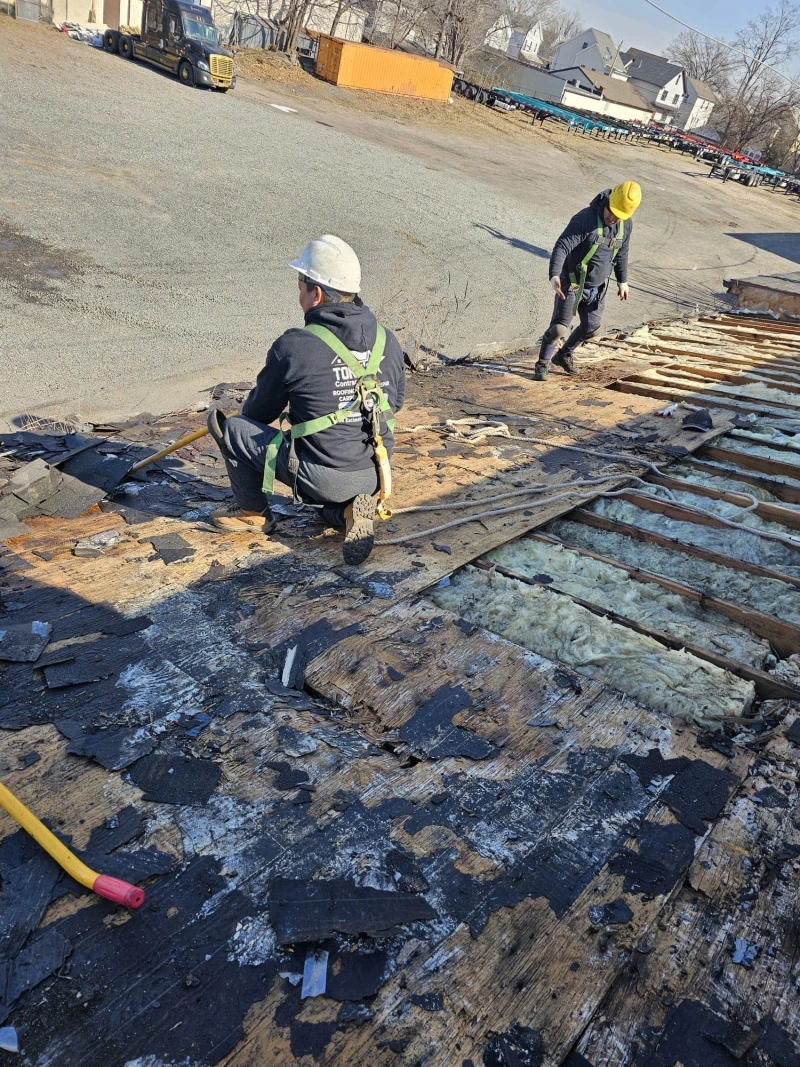
A Quality Emergency Tarp Installed Correctly Prevents Secondary Interior Damage. A roof breach left open — even for one rain event — allows water into the wall cavity, insulation, and ceiling below. Emergency roof tarping must be done correctly: the tarp needs to cover the full damaged zone and extend past the ridge to prevent water channeling under the edges. An improperly placed tarp causes as much damage as no tarp. In New Jersey, where rain following a storm is common, professional tarping within 24 hours of the event is the most important protective action available.
Report Storm Damage Promptly to Protect Your Insurance Claim. New Jersey homeowners insurance policies generally cover storm-related roof damage, but timely reporting is essential. Contact your insurance carrier as soon as the property is safe and your documentation is complete. Submit the dated photos and videos from Step 2, and do not authorize permanent repairs until the adjuster has inspected the damage. Only perform temporary emergency repairs needed to prevent further water intrusion, and keep all receipts and invoices for reimbursement under your policy.
Storm Chasers Target NJ After Major Events — Know Who You Are Signing With. After major storms across Bergen, Ocean, and Middlesex Counties, out-of-state contractors arrive quickly with low estimates and pressure to sign immediately. New Jersey's Home Improvement Contractor (HIC) registration law requires any contractor performing residential work in NJ to be registered with the state. Before signing any contract, verify the contractor's NJ HIC registration number. A local, established NJ roofer with verifiable licensing, insurance, and project history is the only low-risk choice for emergency repair work.
(862) 576-5264
New Jersey's coastal geography makes it one of the most Nor'easter-affected states in the U.S. — these storms produce the sustained high winds and heavy snow loads that cause emergency roof damage
Many NJ communities feature homes built in the 1950s–70s — aging roof decks, original flashing, and older shingle systems are more vulnerable to failure under storm stress.
NJ's active spring severe weather season and fall coastal storm season produce hail, wind, and heavy rainfall events that create emergency roof damage across Bergen, Ocean, and Monmouth Counties
After major NJ storms, out-of-state contractors arrive quickly — NJ's HIC registration law protects homeowners, but verification is the homeowner's responsibility before signing
Northern NJ communities in Bergen County and inland areas receive significant snowfall that creates ice dam conditions and structural deck load stress on older homes every winter
NJ homeowner insurance policies have specific notification and documentation requirements — delays in reporting or pre-repair documentation gaps can affect claim settlement amounts