

Home / Glossary / Gutters Installation

Understanding the Language of Gutter Systems for Every Homeowner

Whether you're reviewing a contractor quote, planning a new installation, or maintaining your existing system, knowing the right terminology puts you in control. This gutters installation glossary breaks down the essential terms you'll encounter throughout the process so you can make confident, informed decisions about protecting your home.

Free Roofing Estimate

This field is for validation purposes and should be left unchanged.
Name(Required)
Street Address(Required)
Key roofing terms

Essential Terms Every Homeowner Should Know

Fascia
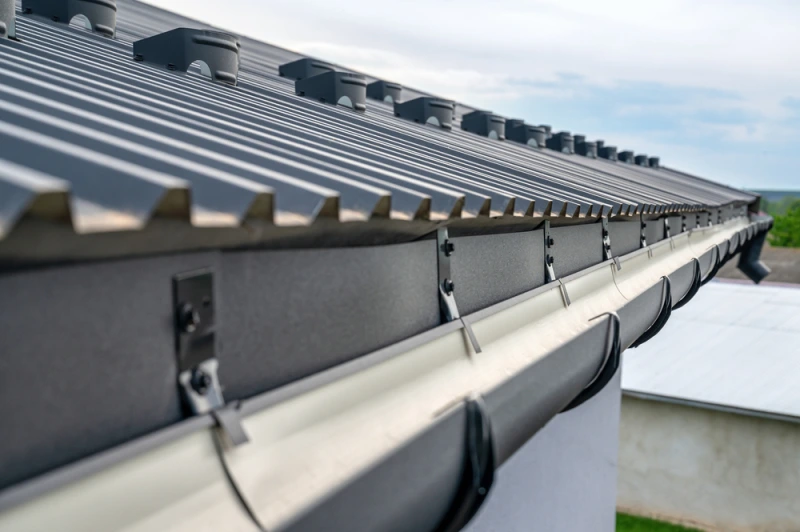
The fascia is the vertical board running along the edge of your roofline, directly behind the gutter system. During gutters installation, it serves as the primary mounting surface where gutter hangers are secured. When gutters overflow or pull away from the fascia due to improper pitch or weight, the board is exposed to prolonged moisture and can rot, compromising both the structural support for your gutters and your roof’s edge protection.
The soffit is the exposed horizontal surface located beneath the roof’s overhanging eave, positioned just below the fascia. Many soffits include ventilation perforations that allow airflow into the attic space, which is critical for regulating temperature and moisture. During a gutters installation project, contractors assess soffit condition carefully, as pre-existing rot or damage from overflowing gutters can affect how new gutters are aligned and anchored along the roofline.
A downspout is the vertical pipe connected to the gutter trough that carries collected rainwater from the roofline down to ground level. Proper downspout placement is one of the most critical decisions in a gutters installation — too few downspouts, or poorly positioned ones, result in water backing up, overflowing, and causing damage to the fascia, siding, and foundation. Extensions or underground drains are often added at the base to direct water away from the home.
Gutter pitch refers to the slight downward angle — typically 1/4 inch of slope per 10 feet of gutter run — built into a gutters installation to ensure water flows consistently toward the downspouts rather than pooling inside the channel. Incorrect pitch causes standing water, which accelerates rust, attracts mosquitoes, adds structural weight, and eventually leads to sagging or detached gutters. Experienced installers measure and verify pitch precisely before securing each section.
Seamless Gutters
Seamless gutters are custom-fabricated on-site from a continuous roll of aluminum, steel, or copper, shaped to fit the exact length of each roofline section without mid-run joints or seams. Unlike sectional gutters assembled from pre-cut pieces, seamless gutters eliminate the most common leak points in a gutter system. They are the preferred choice in professional gutters installation for their durability, cleaner appearance, and reduced long-term maintenance requirements.
A gutter hanger is the fastening hardware used during gutters installation to attach the gutter trough securely to the fascia board. Hangers are typically spaced every 18 to 24 inches along the gutter run and must be installed at consistent intervals to support the weight of both the gutter and standing water after heavy rainfall. Inadequate hanger spacing or improper fastening is a leading cause of gutter sagging and separation from the roofline over time.
Flashing refers to thin strips of metal — most commonly aluminum or galvanized steel — installed at roof-to-wall transitions, valleys, and the roof edge to seal vulnerable areas against water infiltration. In a gutters installation context, drip edge flashing is applied along the eaves so that water sheds cleanly into the gutter trough rather than running behind it toward the fascia and soffit. Missing or improperly installed flashing is a frequent source of hidden water damage.
Gutter guards are protective covers, screens, or mesh systems installed over an open gutter channel to block leaves, twigs, shingle granules, and other debris from entering and accumulating inside. They are often added as part of a comprehensive gutters installation to reduce cleaning frequency, prevent clogs, and extend the system’s effective lifespan. While gutter guards significantly lower maintenance demands, they do not fully eliminate the need for periodic inspections to confirm water is flowing freely through the system.
Gutters Installation

(862) 576-5264

Why Choose Us

Why Choose Tony's Roofing

Owner-Operated Service

Tony personally oversees every project from the initial inspection through the final walkthrough, giving you direct access to the owner at every stage of your gutters installation.

Local NJ & PA Expertise

Based in Union, NJ, we understand the weather patterns, local building codes, and regional home styles across New Jersey and Pennsylvania that directly affect how gutter systems are designed and installed.

Same-Day Estimates

We schedule inspections quickly — often the same day you call — and provide fully written estimates with transparent, itemized pricing and no hidden fees.

Insurance Claim Assessors

Tony works directly with insurance adjusters, provides detailed project documentation, and advocates for fair claim outcomes, having helped hundreds of NJ homeowners navigate the restoration process.

Drone Roof Inspections

We use advanced drone technology to conduct thorough roof and eave assessments without stepping on aging surfaces, delivering precise measurements and accurate installation estimates.

GAF Certified Contractor

– As a GAF Certified installer, Tony's Roofing meets rigorous standards for training, licensing, and insurance, with access to enhanced warranty options up to 50 years.

Get started today

Protect Your Home with the Right Gutters Installation

Now that you know the terminology, you're equipped to ask the right questions, evaluate contractor proposals with confidence, and recognize when your system needs attention. A properly installed gutter system is one of the most cost-effective ways to prevent foundation damage, soffit rot, and interior water intrusion. Don't wait for the next storm to find out your gutters aren't performing.